
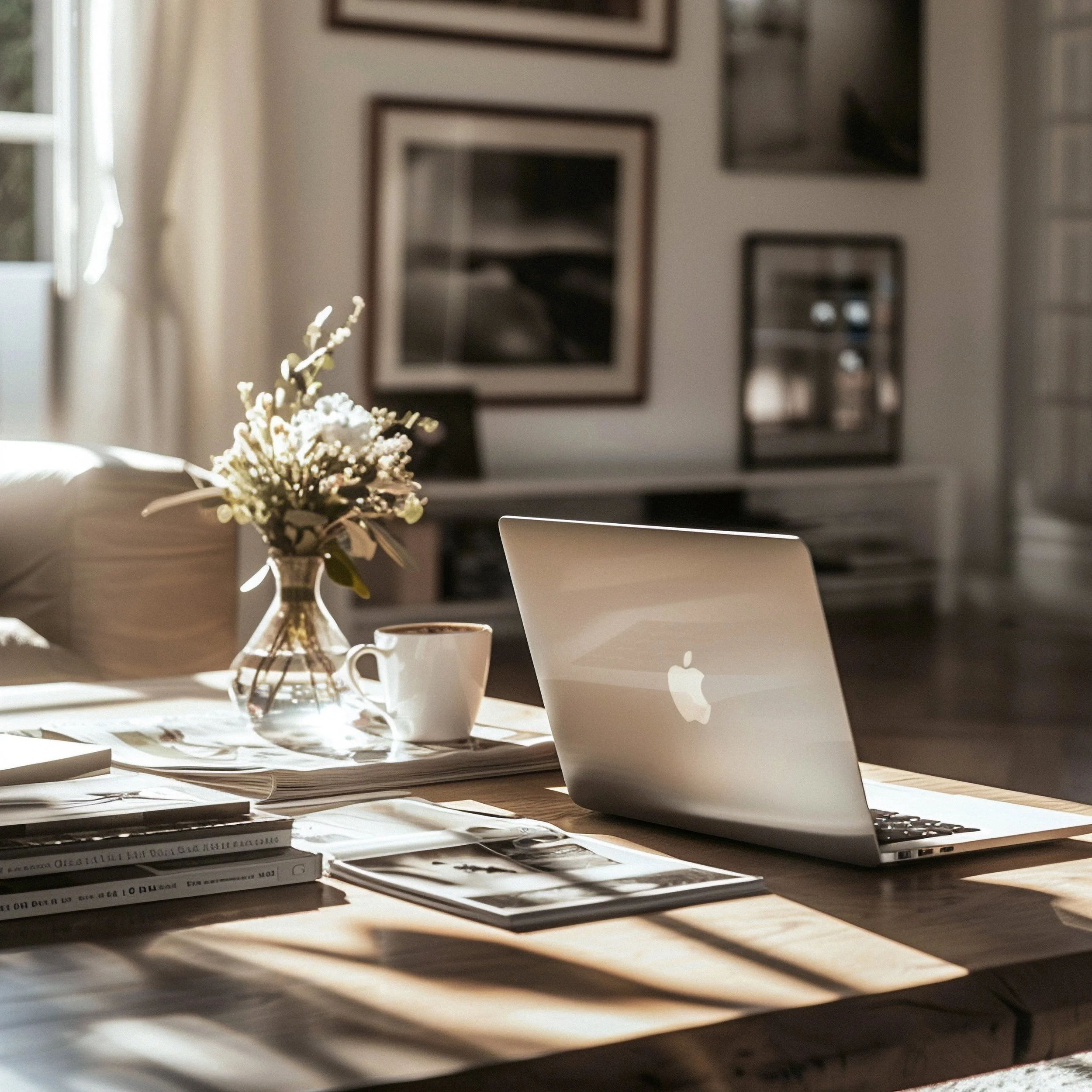
AI-generated imagery has made it easier than ever to create visuals for your business.
From polished lifestyle scenes to product-style images and creative campaign concepts, there are now tools that can generate almost any image you can describe. For business owners who regularly need fresh content, the appeal is understandable.
But as these tools become more accessible, it's worth asking an important question: what do you want your photographs to communicate about your business?
Because while AI can create an image that looks visually appealing, there is a difference between an image that looks right and one that represents something real.
For brands built around people, relationships, products and experiences, that distinction matters.
The appeal of AI-generated imagery
There are some obvious reasons why businesses are experimenting with AI imagery.
It can be quick, convenient and relatively inexpensive to generate a visual for a particular campaign or social media post. You can explore different styles, backgrounds and concepts without organising a physical shoot.
It can also be useful when you're developing an idea and want to explore a creative direction before committing to a full production.
For example, AI tools might help you:
Explore visual concepts and campaign ideas.
Experiment with colour palettes and different creative styles.
Create illustrative or abstract graphics.
Develop moodboards and visual references.
Produce supplementary visuals for certain types of content.
Used thoughtfully, these tools can have a place in the creative process.
However, problems can arise when generated imagery is used to represent something that your business is expected to deliver in real life.
Your brand photographs should represent your actual business
When someone visits your website or social media profile, they're forming an impression of your business.
They're looking at the people behind it, the products you offer, the way you work and the experience they might expect if they become a customer.
This is where real photography plays an important role.
If you're a founder-led business, photographs of you help people connect with the person behind the brand. If you sell products, photographs can show the actual items, their details, materials and packaging. If you provide a service, images can help communicate what that experience looks like.
These aren't simply decorative visuals. They're part of how you introduce your business to someone who may be considering working with you.
A generated image might communicate a particular aesthetic, but it cannot independently show your real workspace, your actual team, your products or the experience of working with you.
The difference between looking polished and building trust
A carefully created AI image can look impressive. But a polished appearance isn't necessarily the same as credibility.
When your photographs represent real people, products and services, they give your audience something tangible to understand.
They can see who they'll be working with, what your product looks like and the environment in which you operate.
For example, imagine you're choosing between two businesses offering a similar service.
One uses generic lifestyle imagery that could belong to almost any company. The other shows the founder, the actual working environment and details of the service being provided.
The second gives you more information about the business and a clearer sense of who is behind it.
That doesn't mean every photograph needs to be a literal representation of a customer interaction or a behind-the-scenes moment. Creatively directed portraits and carefully styled images have their place too.
The important thing is that the imagery still relates to the real business it represents.
Your individuality is difficult to replicate
Your brand isn't just your logo, colour palette or website design.
It's also the way you work, the details you choose to focus on, your personality, your products and the experience you create for your clients.
These things are what make your business distinct.
A generic AI-generated image may fit a particular aesthetic, but it can also make your brand look similar to countless others using the same tools and visual styles.
Real brand photography gives you the opportunity to create something around your business rather than selecting an image that could represent almost anyone.
Through creative direction, styling, locations, lighting and composition, photographs can be developed to reflect your particular brand identity.
The result is a collection of images that belongs to your business, rather than a series of visuals that simply look attractive.
When AI imagery can be misleading
There are situations where using generated imagery to represent a real product, person or service can create problems.
For example:
Showing a product with features, colours or details that differ from the actual item.
Creating an image of a team or workspace that doesn't exist.
Using generated portraits that appear to show the founder or employees.
Suggesting a particular service experience that customers won't actually receive.
The issue isn't necessarily the technology itself. It's whether the image gives someone an inaccurate impression of what they're being offered.
If an image is intended to represent something real, it should be accurate. Transparency also matters when generated or heavily altered imagery could reasonably be mistaken for a genuine photograph.
For businesses where customer confidence is important, this is worth considering carefully.
Real photography gives you a library of usable brand assets
One of the biggest advantages of organising a branding photoshoot is that you're creating a collection of photographs specifically for your business.
Rather than relying on individual images whenever you need content, you can build a library that includes:
Founder portraits and personal brand images.
Photographs of your products and services.
Working and behind-the-scenes images.
Details that communicate your brand's personality.
Team photographs and collaborative moments.
A range of compositions for different marketing platforms.
Each image has a connection to your business and can be used across your website, social media, newsletters, blog articles and promotional campaigns.
With thoughtful planning, you're not simply creating a set of photographs for one launch or one website update. You're building a visual resource that can support your marketing over time.
It's not necessarily a choice between the two
I don't think every business needs to avoid AI entirely.
There are useful applications for the technology, particularly when it comes to developing ideas, creating graphics or exploring visual concepts.
But I do think it's important to understand what your imagery is there to do.
If you need an abstract graphic to illustrate an idea, AI might be a useful option.
If you need to show your actual product, introduce yourself to potential clients or communicate the experience of working with your business, real photography has a different role.
The two can sit alongside one another, provided the distinction is clear and your imagery isn't misleading your audience.
Give your brand something real to show
Your photographs are often one of the first ways someone experiences your business.
They help communicate what you offer, introduce the people behind it and give your audience a better understanding of what makes your brand distinctive.
AI can generate an image to fit an idea, but it can't replace the value of showing people the real business behind the brand.
A considered branding photoshoot gives you the opportunity to create photographs that reflect your work, your personality and the details that make your business yours.
And in a world where almost anything can be generated, there is real value in showing people something that actually exists.
Is your brand imagery working hard enough?
Take a closer look at the photographs you're currently using across your website and marketing. My free guide will help you identify where your image library has gaps, what types of photographs could be missing and where to focus when planning your next branding photoshoot.
Continue reading
PREVIOUS ARTICLE
← Read previous article How One Branding Photoshoot Can Create Months of Content
NEXT ARTICLE
Why Copying Industry Trends Can Water Down Your Individuality.
Read next article →